
Appearance
Work Injury
How an occupational injury happened — the record a workers' compensation claim is built on. Five tabs, each for a different kind of mechanism or consequence: Lifting, Falling, Other injuries, After accident and Job description.
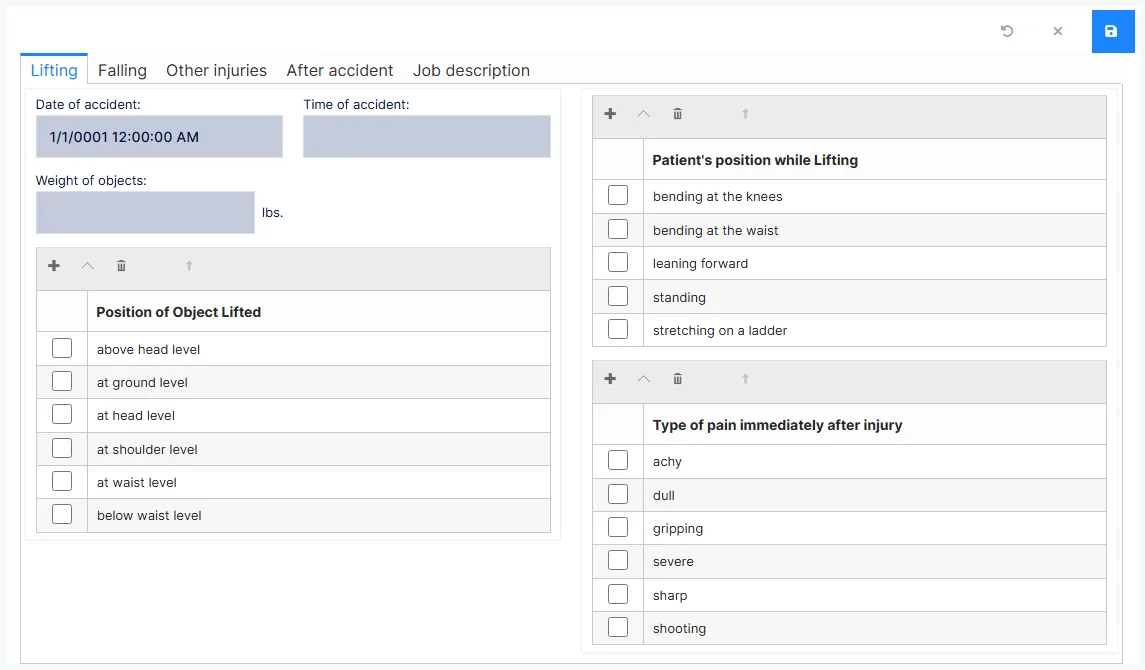
Lifting
| Field | Records |
|---|---|
| Date and time of the accident | |
| Weight of objects | |
| Position of object lifted | Where it was relative to the patient |
| Patient's position while lifting | Their posture |
| Type of pain immediately after injury |
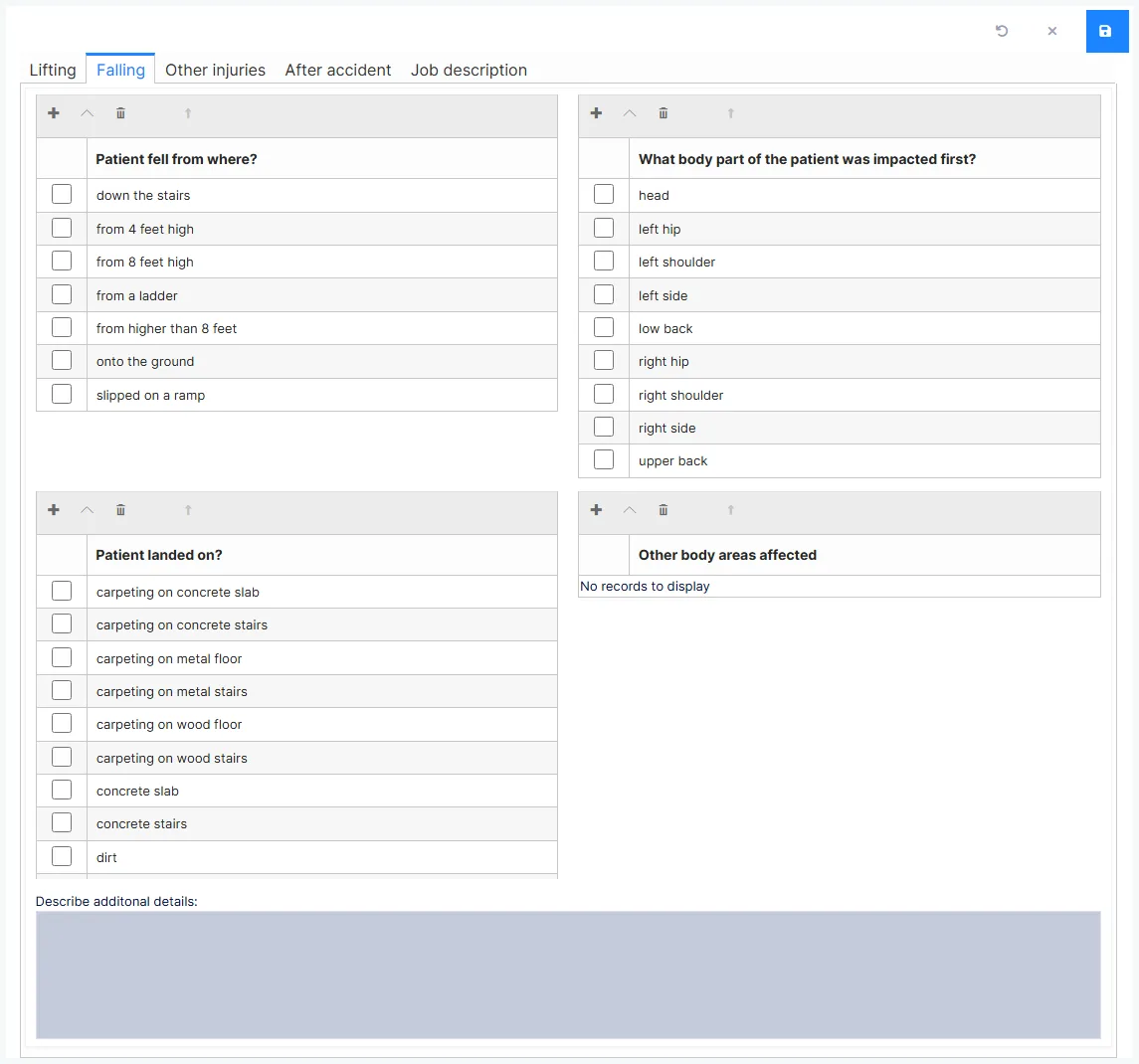
Falling
| Field | Records |
|---|---|
| Patient fell from where? | Height or position |
| What body part was impacted first? | |
| Patient landed on? | The surface |
| Other body areas affected | |
| Describe additional details |
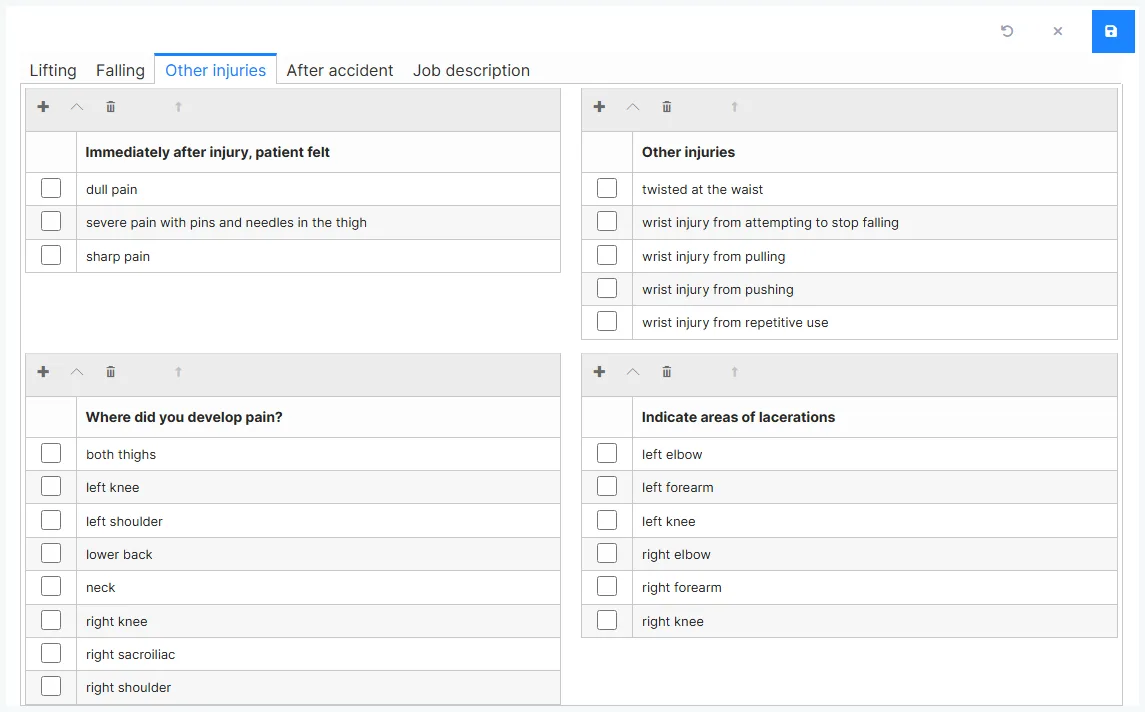
Other injuries
| Field | Records |
|---|---|
| Immediately after injury, patient felt | |
| Other injuries | |
| Where did you develop pain? | |
| Indicate areas of lacerations |
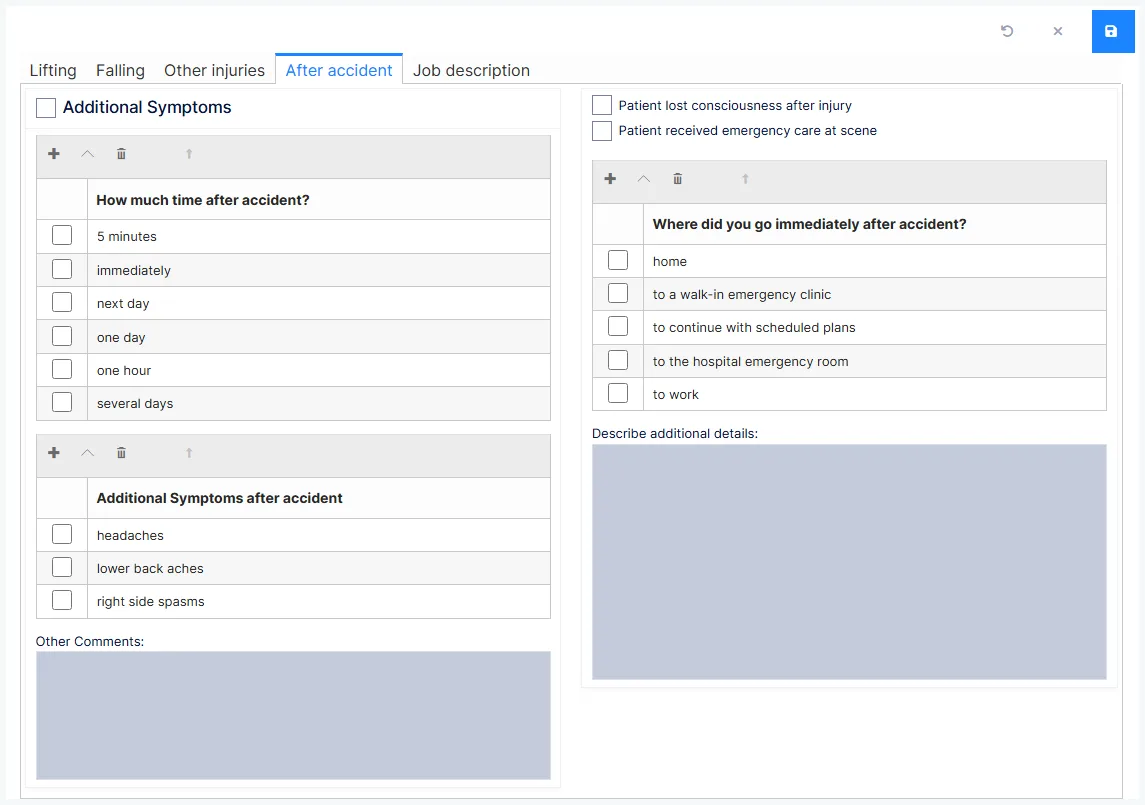
After accident
| Field | Records |
|---|---|
| How much time after the accident? | When symptoms appeared |
| Additional symptoms after accident | |
| Where did you go immediately after? | |
| Patient lost consciousness after injury | |
| Patient received emergency care at scene | |
| Other comments and additional details |
Delayed onset needs to be documented as delayed
Symptoms that appear hours or days later are common and entirely legitimate — but a gap between incident and complaint is the first thing challenged. Recording when symptoms started, explicitly, is what makes that gap explicable rather than suspicious.
Job description
| Field | Records |
|---|---|
| Regular activities | What the job normally involves |
| Hand/wrist movements | |
| Weight normally lifted at work | The routine load |
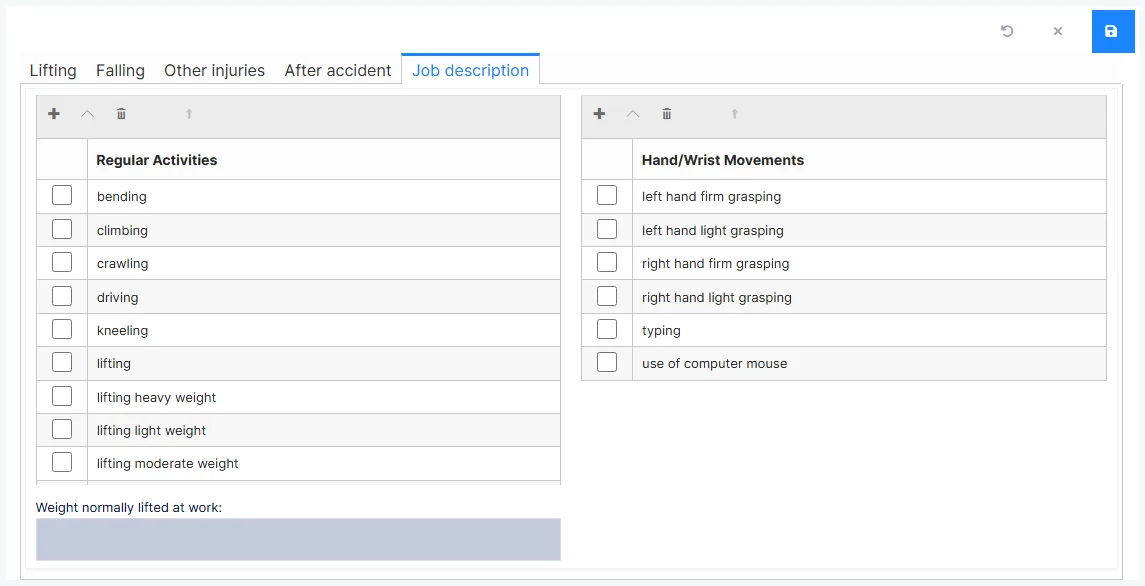
The two weights together tell the story
The weight of the object that caused the injury matters most when read against what the patient normally lifts. Twenty-five kilos is unremarkable for someone who lifts it all day and significant for someone who never does — and that comparison is what a claims examiner is looking for. That is why the routine load sits on its own tab: it describes the job, not the incident.
Getting the billing right
The injury record does not route the claim. On the patient's policy, tick Employment — that is what makes it a workers' compensation claim.
New York has its own form sequence
Workers' compensation in New York runs on the C4 forms, with the first claim on the C4.0 and every subsequent one on the C4.2 — and claims sent on the wrong one are denied on the technicality. That is set up on the policy, not here.